If you are drawn to Hancock Park, chances are you are not looking for a cookie-cutter house. You are looking for scale, detail, and a sense of history that is hard to replicate in newer construction. Buying a character home here can be incredibly rewarding, but it also comes with rules, preservation considerations, and due diligence that matter from day one. Let’s dive in.
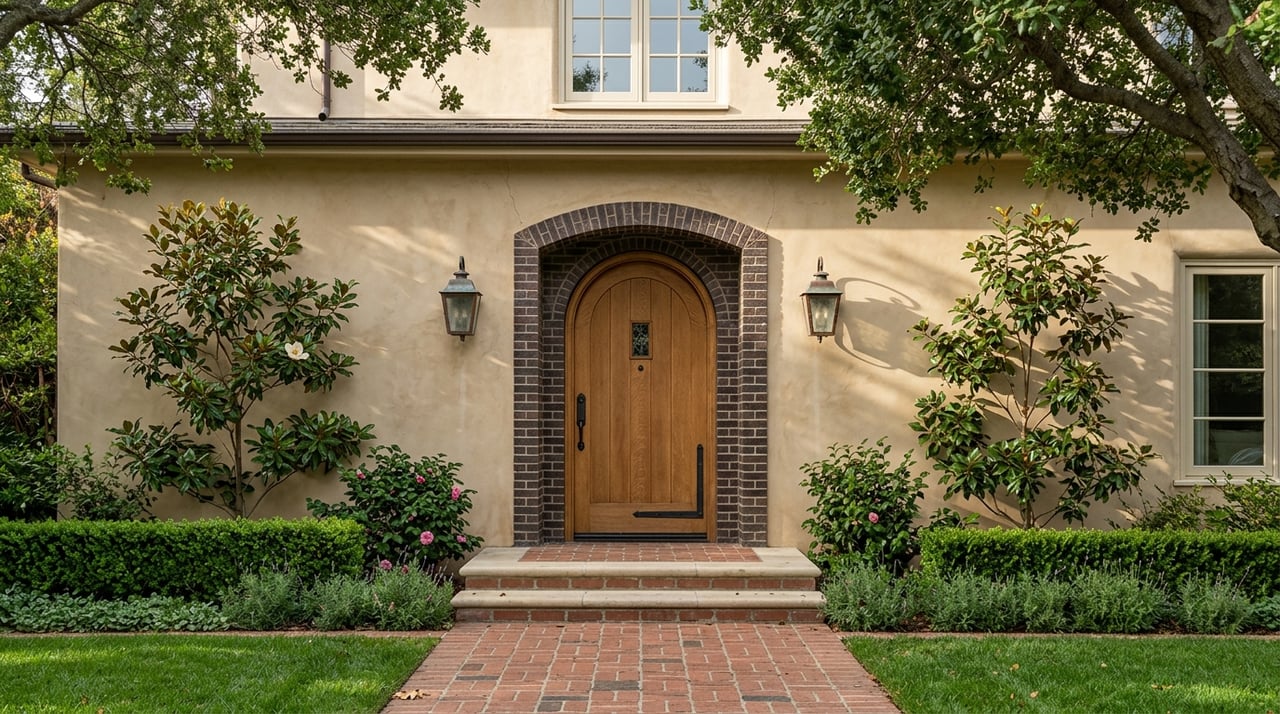
Hancock Park stands out because its historic design was intentional from the beginning. According to the City of Los Angeles preservation overview for Hancock Park, the neighborhood is known for palatial two-story single-family homes in Period Revival styles, along with wide setbacks, side driveways, rear garages, and mature landscaping.
That combination shapes the experience of the street just as much as the houses themselves. The preservation plan highlights features like porte cocheres, sycamores or elms in parking strips, and a park-like setting that gives the neighborhood its visual rhythm.
The appeal also extends beyond one set of blocks. The Los Angeles Conservancy’s history of Windsor Square, Hancock Park, and Fremont Place places Hancock Park within a broader early-20th-century residential landscape known for 1910s and 1920s mansions and longstanding historic identity.
In Hancock Park, a character home is not limited to one architectural style. The city identifies Tudor Revival, English Revival, Spanish Colonial Revival, Mediterranean Revival, Monterey Revival, and American Colonial Revival among the area’s core styles, while the preservation plan also includes Eclectic Revival and some early modern homes within the district’s period of significance from 1920 to 1956.
What matters most is how much of the home’s historic character remains intact. The Hancock Park Preservation Plan makes clear that materials, craftsmanship, roof forms, doors, windows, walkways, retaining walls, and site design all contribute to a property’s significance.
That means buyers should look beyond the facade. Original windows, doors, front-yard layout, and even how paving or fencing affects the streetscape can all influence both value and future renovation options.
One of the biggest surprises for buyers is that the lot design can be just as important as the house itself. In Hancock Park, generous front setbacks, side driveways, mature trees, and rear-oriented garage placement are part of the neighborhood’s defining character.
The preservation plan specifically notes that excessive front-yard paving can disrupt the streetscape. It also states that front-yard fencing is generally considered inappropriate within the district’s park-like setting.
Historic windows and doors are often more than charming details. They are core character-defining elements, and the city’s guidance strongly favors repair over replacement whenever possible.
If replacement becomes unavoidable, the preservation plan says the new windows should match the originals in size, shape, pane arrangement, materials, hardware, construction method, and profile. The same logic generally applies to original doors and hardware, which is why these details deserve a close look during your evaluation.
If you are considering updates, one designation can shape your path right away: whether the property is classified as Contributing or Non-Contributing. The Hancock Park preservation plan explains that a Contributing property was built during the district’s period of significance and still retains its period features.
That distinction is common in Hancock Park. The survey cited in the preservation plan found that about 86 percent of the 1,282 surveyed structures and sites were classified as Contributing.
For buyers, this matters because review requirements can differ depending on the property’s status. Before assuming a remodel will be simple, it is smart to confirm the parcel’s designation through the city’s systems and understand how that status may affect your plans.
Hancock Park is a local historic district, so exterior work is not treated the same way it would be in a typical neighborhood. The city’s historic district project review page states that exterior renovations, additions, new construction, and even some non-permitted changes such as landscaping and paint can require HPOZ review.
This is one of the most important things to understand before you buy. If you already know you want to repaint, redesign landscaping, replace windows, or add onto the home, those ideas should be part of your due diligence before closing, not an afterthought later.
Some work may qualify for administrative approval, while larger or more visible changes may require a Certificate of Appropriateness. Unauthorized work can also lead to code enforcement action and fines, so it pays to approach changes carefully and with the right guidance.
Older homes often inspire big ideas, but in Hancock Park, the review process makes early planning especially important. Your timeline, design choices, and contractor selection may all be affected by the property’s historic status and the scope of the work.
That does not mean you cannot improve a home. It means you should evaluate the house with preservation rules in mind and think through likely projects before you commit.
A general home inspection is important, but it is rarely the full picture with an older character property. In this part of Los Angeles, a more layered approach to inspections is often the safer path.
Based on the age of many Hancock Park homes and the guidance in the research above, buyers should consider a checklist that includes:
The California Earthquake Authority advises that owners of older homes built before 2000 should consider a seismic retrofit. For raised-foundation wood-frame homes, that may include bolting the frame to the foundation and bracing cripple walls with plywood or OSB where needed.
For a buyer, that means you should ask not only whether retrofit work has been done, but also whether documentation is available. If the home has not been updated, you may want a specialist’s opinion on what improvements could be recommended.
If the house was built before 1978, lead paint rules are part of the process. The EPA’s lead-based paint requirements say buyers should receive the required disclosure and brochure for pre-1978 homes.
This becomes especially important if you plan to renovate soon after closing. The EPA also notes that renovation work in pre-1978 properties should be handled properly and safely by trained and certified contractors.
Asbestos is another issue that can surface in older homes, especially when walls, ceilings, flooring, or other legacy materials may be disturbed. The EPA’s asbestos guidance explains that intact material that will not be disturbed generally does not need testing.
The risk rises when suspect material is cut, drilled, sanded, or otherwise disturbed. If you are planning a remodel, it is wise to have a trained and accredited asbestos professional inspect and sample materials where appropriate.
In California, termite and wood-destroying-organism inspections are often essential. The Structural Pest Control Board notes that many lenders require a WDO inspection before financing, and professional visual inspection remains a key method of detection.
For a large, older home with extensive wood elements, this is a meaningful part of your diligence. It can affect repair planning, negotiation, and lender requirements.
In some cases, owning a historic property can come with benefits as well as restrictions. The city’s historic resource incentives and resources page says the Mills Act Historical Property Contract Program may offer a potential property-tax reduction for owners of Los Angeles Historic-Cultural Monuments and Contributing properties within HPOZs.
That does not mean every buyer will qualify automatically, and it should be reviewed carefully in context. Still, it is a worthwhile point to explore if you are buying a Contributing property and planning for long-term ownership.
It is also useful to know what does not usually apply. The same city page notes that the federal rehabilitation tax credit generally applies to income-producing properties, not owner-occupied housing.
Character homes in Hancock Park offer something rare: architectural depth, established streetscapes, and a strong sense of place. But the smartest purchases usually happen when you balance emotion with a very practical review of preservation rules, property condition, and future project feasibility.
If you are considering a Hancock Park home, your best next step is to verify the property’s historic status, understand the likely HPOZ review path, and build an inspection strategy around the realities of older construction. With the right planning, you can move forward with more clarity and fewer surprises.
If you want a thoughtful, concierge-level approach as you evaluate a distinctive Los Angeles property, connect with Rebecca Davis for tailored guidance.
Our expansive network and white-glove service ensure a bespoke experience for both buyers and sellers. Let our top producing team find your dream home today.
Contact Today