If you picture Venice Beach as one nonstop boardwalk scene, you are only seeing part of the story. Living here can mean morning walks by the canals, bike rides along the coast, dinner on a lively commercial street, and a home tucked into a surprisingly calm residential pocket. If you are considering a move to Venice, it helps to understand how the neighborhood really functions day to day. Let’s dive in.
In Venice, the beach is not just a backdrop. It shapes the pace of everyday life in a very practical way. Los Angeles County notes that Venice Beach has almost three miles of coastline and 238 acres, with swimming, biking, surfing, fishing, and beach volleyball all part of regular use.
That means many of the activities people build into a normal week are outdoors and close to home. You might head to the bike path in the morning, walk Ocean Front Walk in the afternoon, or spend time near the Venice Breakwater, which the county identifies as a notable local surf spot. The coast feels less like a weekend destination and more like part of the neighborhood’s daily routine.
The public spaces here are active, visible, and central to the Venice experience. City recreation sources describe Ocean Front Walk, Muscle Beach, courts, and beachfront recreation areas as major parts of local life. If you enjoy being outside and having public amenities woven into your day, Venice offers that in a way few Los Angeles neighborhoods do.
One of the biggest surprises about living in Venice is how quickly the atmosphere can change. The Venice Community Plan describes Abbot Kinney Boulevard as a unique pedestrian-oriented area with shops, restaurants, and art galleries, while Ocean Front Walk is a historic pedestrian-oriented district with retail, dining, and essential services like a post office, bank, hotel, and medical clinic.
In simple terms, Venice is not one single environment. Some parts feel walkable, social, and village-like. Other corridors, especially Lincoln Boulevard, are more auto-oriented and urban in feel.
That matters when you are deciding where to live. Two homes may both have a Venice address but offer very different daily experiences. One might place you close to the highest-energy retail and beach activity, while another gives you easier access in and out, or a more residential rhythm.
The Venice Beach Boardwalk is one of the neighborhood’s defining features, and it sets expectations for what the area can feel like. According to the city, the boardwalk stretches more than two miles and hosts hundreds of vendors and performers, along with restaurants and food venues.
That creates a highly public, active environment. There is constant movement, plenty of people-watching, and a level of energy that many residents love because it feels creative, spontaneous, and unmistakably coastal Los Angeles.
At the same time, that energy is not for everyone every day. If you want a front-row seat to activity, the beachfront can be a draw. If you prefer more separation from crowds and visitor traffic, you may find that living a bit farther from Ocean Front Walk better fits your lifestyle.
The quieter side of Venice is just as important to understand as the famous beachfront. Local planning documents highlight the Venice Canals and the walk-street network as key parts of neighborhood character, with pedestrian walkways, local streets, and paths built into how people move through the area.
These sections of Venice feel very different from the boardwalk. The canal area, which is part of the Venice Canal Historic District, includes six canals, sidewalks, and pedestrian and vehicular bridges. The walk streets create another layer of residential life where walking is part of the physical design of the neighborhood.
For many buyers, this is the version of Venice that changes their perception of the area. It shows that Venice is not only about crowds and activity. It also offers pockets where the pace is softer, the streetscape is more intimate, and daily life can feel more residential.
Venice does not have a single dominant housing style. Its homes reflect different eras, design ideas, and scales, which is a big part of the neighborhood’s appeal.
Historic Venice includes early 20th-century cottages, Craftsman homes, and bungalow-era residential clusters. The LA Conservancy documents examples like the Irvin Tabor Family Residences, a group of one-story bungalows arranged around a courtyard, and notes that bungalow courts were once much more common in Venice than they are today.
At the same time, Venice is also known for bold modern and architect-designed homes. The LA Conservancy points to later examples such as the Delmer Residence and the 2-4-6-8 House, reinforcing that Venice has long welcomed distinctive design and individualized homes.
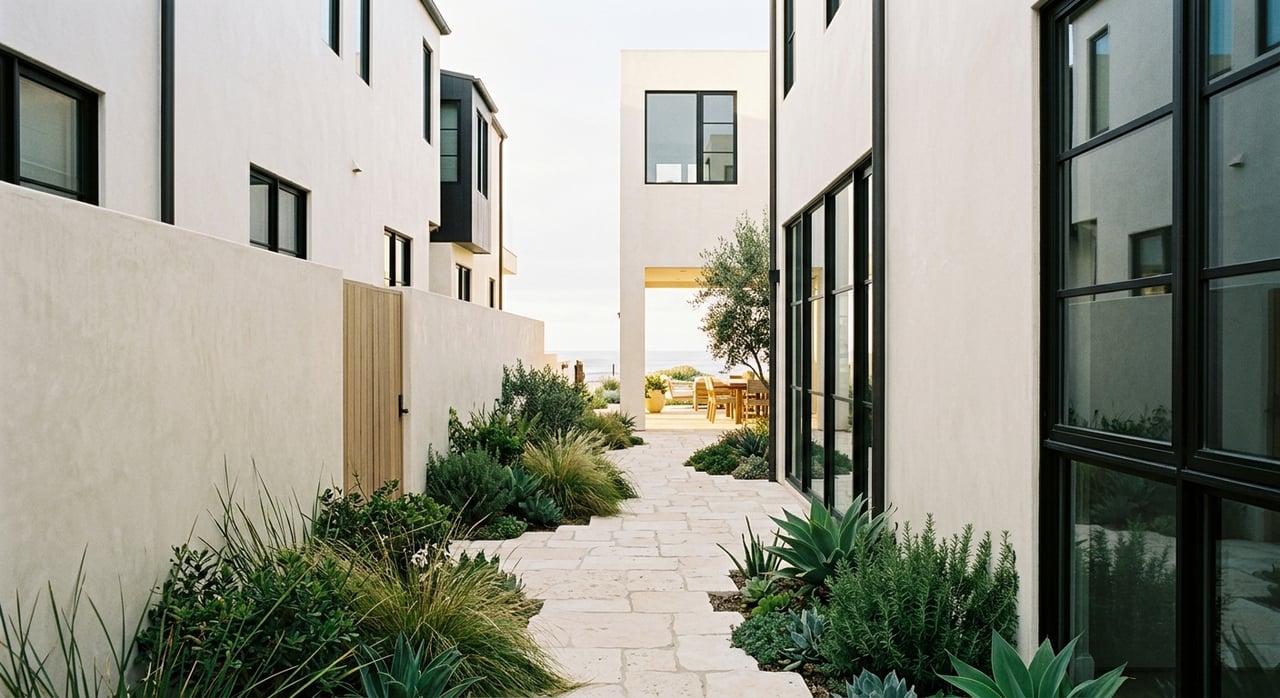
For you as a buyer, that means the housing search often feels more custom than formulaic. You may see a classic bungalow on one street, a preserved historic home nearby, and a striking modern infill property just around the corner. Venice reads as layered and eclectic, not uniform.
Venice is often described as walkable, and in many areas that is true. But the practical experience depends heavily on where you are within the neighborhood.
The community plan makes clear that some districts are strongly pedestrian-oriented, especially around Abbot Kinney Boulevard and Ocean Front Walk. In those areas, shops, dining, galleries, and services are part of the street life. Other stretches are more car-oriented, especially on larger corridors.
So if walkability is high on your list, you will want to think beyond the neighborhood name alone. The key question is not just whether you want to live in Venice, but what kind of Venice experience you want each day.
Venice offers unusual proximity to the beach, dining, recreation, and street life. That convenience is a major reason people are drawn to it. But local coastal planning documents also treat parking and traffic management as ongoing access issues, which tells you something important about daily life here.
Popular places attract people, and Venice is no exception. The same features that make the area compelling can also make it busy. On high-activity days, getting around, finding parking, or navigating the most visited parts of the neighborhood may take more patience.
This is why choosing the right pocket matters so much. Venice can work well for different lifestyles, but the fit often comes down to balancing access to the neighborhood’s energy with the amount of activity you want right outside your door.
Venice often appeals to people who want a neighborhood with a strong sense of place. If you value being near the coast, enjoy walking or biking as part of daily life, and like a mix of public activity and residential character, Venice can be especially compelling.
It can also be a fit if you appreciate architecture with personality. Because the housing stock is so varied, buyers who prefer individuality over sameness often find Venice more interesting than neighborhoods with a more predictable housing pattern.
The best fit usually comes from matching your routine to the right part of the neighborhood. Some people want to be near the center of the action. Others want the Venice name and lifestyle with a quieter home base a few streets away.
If you are thinking seriously about a move, it helps to evaluate Venice through the lens of your real daily habits. A few questions can help clarify whether it is the right match:
When you answer those questions honestly, Venice becomes easier to understand. It is not simply busy or quiet, trendy or residential, beachy or urban. It is all of those things, depending on where and how you live in it.
What it is really like to live in Venice Beach comes down to contrast. You get a neighborhood shaped by the coast, filled with active public spaces, and known for strong personality. You also get residential pockets, historic elements, walk streets, canals, and a housing mix that feels deeply specific to place.
That blend is what makes Venice stand out. It offers everyday access to the beach and a street life that feels hard to duplicate elsewhere, but it asks you to be intentional about location and lifestyle fit. When you choose the right pocket, Venice can feel both energizing and surprisingly livable.
If you are weighing a move to Venice or comparing different parts of the Westside, Rebecca Davis can help you narrow in on the streets, housing styles, and lifestyle details that fit you best.
Our expansive network and white-glove service ensure a bespoke experience for both buyers and sellers. Let our top producing team find your dream home today.
Contact Today